Melbourne’s Trusted Experts in Automated Gates & Fencing – Residential, Commercial & Industrial Solutions.

How Aluminium Slats Improve Privacy and Aesthetic Appeal for Your Home
Discover why aluminium slats are the top choice for Australian homes. Learn about privacy configurations, low-maintenance benefits, and how they outperform timber and steel.
3/24/20266 min read
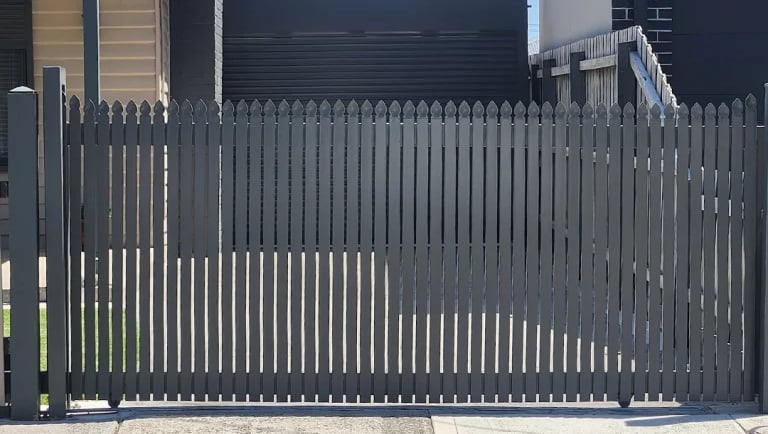
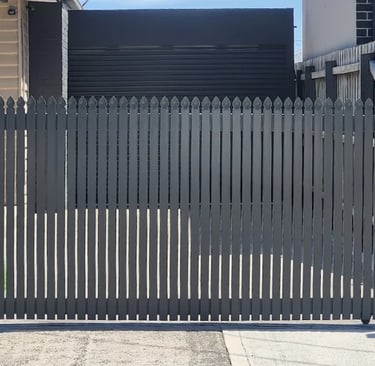
Aluminium slats have become a common fencing choice across Australian properties. They work for privacy, they suit modern home designs, and they hold up well in Australian conditions. Unlike timber, they don't warp or rot. Unlike steel, they don't rust when the surface gets scratched. They also need very little upkeep compared to most other fencing materials.
Aluminium slats come in a range of colours, orientations, and spacing configurations. This means the same material can work for a front boundary fence, a pool enclosure, a deck balustrade, or a pergola screen. The application is flexible, which is part of why they've become a go-to option for both new builds and renovations. This post covers how they work, where they're used, and what to know before buying.
What Aluminium Slats Are and How They Work
Aluminium slats are flat, narrow strips of aluminium arranged into panels. The slats can run horizontally or vertically. Some installations mix both directions depending on the design preference.
The slats are spaced apart rather than sitting flush against each other. This allows air and light to pass through while still blocking sightlines. They're fixed to posts and used across a range of applications:
Boundary and front fences
Privacy screens and garden dividers
Balustrades on decks and balconies
Carport and pergola side walls
Gate infill panels
Most modern aluminium slat systems use a channel and clip setup where the fasteners are hidden. From the outside there are no visible screws, which gives a cleaner finish.
Privacy and Sightline Control
Two main things determine how much privacy aluminium slats provide:
Slat spacing: slats placed closer together block more of the view. Wider gaps let in more light and air but reduce privacy. Most installations land somewhere in the middle depending on the location of the fence on the property. A front boundary facing a busy street usually calls for tighter spacing than a side fence between two houses.
Slat angle: slats angled slightly can block sightlines from street level while still allowing light in from above. This is useful when you want natural light in the yard without being visible from the footpath or road.
It's also worth noting that privacy doesn't only come from the slats themselves. Fence height plays a role too. A 1.8m fence with wider slat spacing can offer similar privacy to a 1.5m fence with tighter spacing, depending on the terrain and the height difference between your property and the street. Gap sizing between slats is also subject to council regulations. Different local councils have rules around fence height and slat spacing, particularly for front boundaries. It's worth checking your local requirements before settling on a configuration.
For homes that already have a gate along their driveway or front boundary, aluminium slat panels running alongside it create a consistent look. If you're looking at aluminium and steel fencing options, it's worth planning both the fence and gate at the same time.
Durability and Weather Resistance
Australia is hard on outdoor materials. UV exposure, coastal salt air, humidity, and temperature swings cause deterioration over time. Here is how common fencing materials compare:
Timber absorbs moisture over time, which leads to warping, cracking, and splitting. Near the coast it deteriorates faster. It also needs painting or oiling every couple of years.
Steel relies on its coating staying intact. Once that chips or scratches, rust sets in. In coastal or humid areas, that can happen sooner than expected.
Aluminium doesn't absorb moisture, so warping and cracking aren't issues. It's naturally corrosion resistant, and a powder coat finish adds protection against UV fading. It holds its appearance well over many years.
Aluminium also doesn't attract termites or other pests, unlike timber. This is a practical advantage in many parts of Australia.
Aesthetic Appeal and Design Options
Aluminium slats suit a range of home styles. The straight lines work well with contemporary architecture and can also complement older homes with the right colour selection.
Powder coating gives a range of colour choices:
Whites and off-whites
Warm and cool greys
Charcoals and blacks
Earthy and natural tones
Timber-look finishes that replicate wood grain without the maintenance
Slat orientation affects the overall appearance:
Horizontal slats suit modern builds and renovations. They complement architecture with clean horizontal lines.
Vertical slats work better on taller fence sections and give a more structured look.
Some properties use both orientations in different areas. Aluminium slat panels also pair well with other outdoor features like pergolas, gates, and deck balustrades. For properties where a driveway gate is already installed, matching slat fencing on either side keeps the entry looking consistent. If you're still deciding on a gate style, the gate designs gallery shows what's available.
Where Aluminium Slats Are Used
Front boundary fences: the most common use. Slats handle both privacy from the street and appearance from the footpath. This is usually where homeowners want the most control over spacing and colour since it's the most visible part of the property.
Side fences between neighbouring properties: where day-to-day privacy is most needed. Height is flexible and the panels don't look imposing from either side. A standard 1.8m height works for most residential side fences.
Balustrades on decks and balconies: slat infills allow airflow across the deck while limiting visibility from outside. They also add a more finished look compared to standard tubular or glass balustrade options.
Pergola and carport screening: slat panels on the open sides of a structure add privacy without closing it off completely. They also reduce wind entering the space, which helps in exposed areas.
Pool fencing: aluminium meets Australian standards for pool barriers when installed to the correct specifications. The gap sizing and latch height requirements are specific, so this needs to be checked with a licensed installer before proceeding.
Security and Structural Strength
Cut and damage resistance: aluminium is harder to cut or bend than timber or lightweight fencing alternatives, which makes it more resistant to forced entry. The panels also don't have the same soft spots that develop in timber over time as it weathers.
Wind performance: slat panels hold up in strong winds. Post spacing and panel construction affect this, so it's worth asking about load ratings for wind-exposed locations. In areas that experience strong seasonal winds, the post depth and footing type matter as much as the panel itself.
No deterioration at weak points: unlike timber that softens over time or steel that corrodes at scratched areas, aluminium maintains its structural integrity without ongoing treatment. There are no points along the fence that weaken faster than others.
When slat fencing is combined with other security fencing options along the full perimeter, the boundary becomes more resistant to entry than either element on its own.
Eco-Friendly and Recyclable
Fully recyclable: aluminium can be reprocessed at the end of its life without losing material quality. This is different from treated timber or coated steel, which often can't be recycled cleanly due to the chemicals or coatings involved.
Reduces timber use: aluminium fencing doesn't rely on timber, which means fewer trees are used. This is relevant given how much residential fencing gets replaced every decade or so due to timber deterioration.
Long lifespan: aluminium doesn't need replacing as frequently as timber, which reduces overall material waste over time. A fence that lasts 25 years uses far fewer resources than one that needs replacing every 10.
Cost and Long-Term Value
Aluminium slats cost more upfront than Colorbond or basic timber. Once installed, ongoing costs are low. There's no spending on:
Repainting or restaining
Replacing warped or rotted sections
Sealing or treating the surface
Pest or termite treatments
Over ten to fifteen years, the cost difference compared to timber narrows. Some homeowners use slat fencing only on sections where privacy matters most and use simpler fencing elsewhere to manage the overall spend. Pre-fabricated panel kits are also available which can reduce installation costs.
What to Consider Before Installing
These questions help narrow down the right product before you start getting quotes:
What is the main goal i.e privacy, appearance, security, or a combination?
Which sections of the property need the most coverage?
What colours and slat orientations suit the house?
Are there council requirements around fence height or slat spacing in your area?
Does the fencing need to work alongside an existing or planned gate system?
Getting clear on these before approaching a supplier means you're comparing like for like across quotes rather than getting different configurations priced up. It also reduces the chance of making changes after installation, which adds cost.
Final Thoughts
Aluminium slats are a practical fencing option for Australian homes. They provide privacy, suit a range of home styles, require little maintenance, and hold up well in local conditions. They cost more upfront than some alternatives but ongoing costs are low. For most residential applications they are a straightforward, long-lasting choice.
If you're planning a fencing project and want something that works with a gate or automation setup, it helps to get both looked at together. iGate Automation works across fencing and gate installations in Melbourne.
Frequently Asked Questions
1. How much privacy do aluminium slats provide?
It depends on slat spacing and angle. Closer spacing blocks more of the view. Angled slats can stop sightlines from street level while still letting light in from above. Ask your installer about the best configuration for your specific fence location.
2. Do aluminium slats comply with Australian pool fencing standards?
Yes, when installed correctly to the required specifications. Gap sizing, height, and latch mechanisms all need to meet Australian standards. A licensed installer will know the relevant requirements for your state.
3. Can aluminium slat fencing work alongside an automated gate?
Yes. Slat panels can run up to either side of a gate to create a consistent boundary look. It's worth coordinating the installation so post sizing, panel heights, and colour finishes match up properly.
4. How do aluminium slats hold up in coastal areas?
Well, compared to most alternatives. Salt air degrades steel and breaks down timber relatively quickly. Aluminium with a quality powder coat finish handles coastal conditions without the same deterioration.
5. What colour options are available?
Powder coating covers whites, off-whites, greys, charcoals, earthy tones, and timber-look finishes. Most suppliers can accommodate specific colour requests with enough lead time.
Address : 22 Barkly St, Brunswick East VIC 3057, Australia
Connect With Us On Social Media
I Gate Automation
ABN 25 634 531 231
Our Privacy Policy
Our Terms & Conditions
Contacts
1300 251 900
info@igateautomation.com.au