Melbourne’s Trusted Experts in Automated Gates & Fencing – Residential, Commercial & Industrial Solutions.

6 Reasons Your Electric Gate Won't Open After Rain
Learn why your electric gate won't open after rain. Discover 6 common causes, simple checks you can do, and when to call a Melbourne gate technician.
7/8/20267 min read
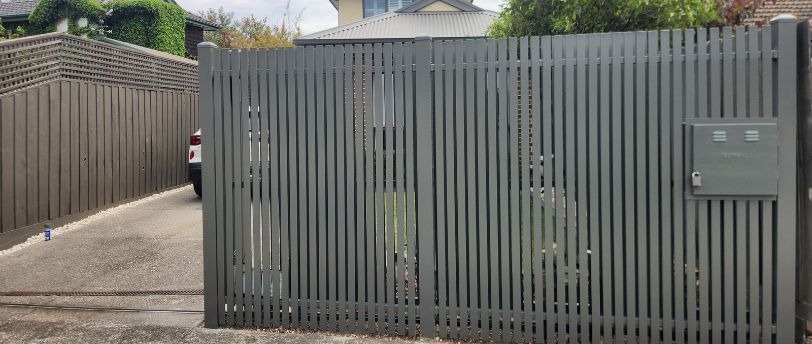
Melbourne weather changes fast. It can be dry all morning and pouring by lunch, and that is often when people notice their electric gate has stopped working. If this has happened to you right after a downpour, you are not dealing with a rare fault. It is one of the most common calls we get at iGate Automation, and most of the time the cause is easy to spot once you know what to look for.
This blog covers the six most common reasons an electric gate stops opening after rain. It also covers how to tell them apart, and when it makes sense to call a technician instead of pressing the remote again and again. Sliding gates and swing gates both run into the same problems, and we see this across homes and businesses all over Melbourne.
Why Rain Is Hard on Electric Gates
An automatic gate is really a small electrical system sitting outside in the weather all year round. It has a motor, a control board, sensors and wiring. Every one of these parts can be affected by moisture. Even a well built system will struggle if water finds a way past a seal or a joint that has worn down over time.
Melbourne adds its own twist to this. We get long dry spells followed by sudden heavy rain. That kind of shift causes condensation inside housings that were sealed up tight during summer. Older gates, or ones that have not had a service in a while, are usually the first to show problems when the wet weather rolls in.
The Most Common Reasons Your Gate Won't Open
Here is a closer look at each of these six problems, what is actually happening inside the system, and why rain tends to bring it on.
1. Water Has Gotten Into the Control Box
The control box is the brain of the whole gate. It is usually a small weatherproof cabinet mounted near the motor, and it holds the circuit board that tells the gate when to open, close, and stop. Most control boxes are rated to handle everyday weather, but the seal around the lid, the cable entry points, and the door hinge all wear down over time. Once one of these gives way, water can get onto the board itself.
When that happens, the board can short out straight away, and the gate stops responding to everything, the remote, the keypad, all of it. Sometimes you will notice a burning smell or see a bit of rust or corrosion around the connections if you open the box up. This is one of the more serious faults on this list, because a damaged board usually needs to be replaced rather than dried out and reused.
2. The Sensors Are Picking Up a False Obstruction
Most automatic gates use photo eye sensors as a safety feature. These work in pairs, one sends an invisible beam and the other receives it, and if something breaks that beam while the gate is closing, the gate is designed to stop or reverse so it does not close on a person, a car, or a pet.
Heavy rain can trick this system without any real obstruction being there. Water streaming down the sensor lens, mist sitting in the beam path, or even a wet cobweb stretched across the sensor can be enough to interrupt the signal. The gate reads this as something blocking its path, so it stops or reverses even though the driveway is completely clear. This is usually one of the easier faults to fix yourself, since it often just needs the lenses wiped dry and realigned.
3. A Circuit Breaker or Safety Switch Has Tripped
In Australia, outdoor power circuits are required to run through a safety switch, sometimes called an RCD, which cuts power the instant it detects even a small current leak. This is a safety feature designed to protect people from electric shock, and it is very sensitive to moisture.
During heavy rain, water can settle around an outdoor power point, a joint in the cabling, or even inside the motor housing itself, and this is often enough to trip the switch. The good news is that this is not usually a sign of damage. It just means the safety switch did exactly what it is meant to do. The gate will often work fine again once the switch is reset, though it is worth keeping an eye on whether it keeps tripping, since that can point to a deeper wiring issue.
4. The Wiring or a Cable Joint Has Corroded
Gate systems rely on cable running between the control box, the motor, and any sensors or keypads set up around the property. In a lot of installations, some of this cable runs underground or along an exposed fence line, and if a joint has not been properly sealed, water can slowly work its way in over several months rather than during a single storm.
This kind of fault tends to build up gradually rather than appear all at once. You might notice the gate still opens and closes, but slower than it used to, or it hesitates partway through the movement. Left alone, corrosion inside a cable joint tends to get worse each time it rains, so it is worth having a technician check the wiring runs if this pattern sounds familiar.
5. The Remote or Keypad Has Taken On Moisture
Handheld remotes and outdoor keypads both have small circuit boards inside a plastic casing, and while most are built to handle light weather, they are not designed to sit in standing water or get properly soaked. A remote left on a car dashboard in the rain, or a keypad without a proper weatherproof cover fitted over it, can stop working after a heavy downpour even though the rest of the gate system is completely fine.
This is one of the simpler problems to rule out, because you can usually test it with a spare remote or by trying the keypad on its own. If the gate opens using the manual release or a different remote, the fault sits with that one device rather than the gate itself, and it is often cheaper and quicker to fix than any of the other issues on this list.
6. The Gate Hardware Has Swollen or Shifted
This last one is less about electronics and more about the gate itself. Timber gates can absorb moisture and swell slightly after a lot of rain, and steel or aluminium frames can shift a little if the ground underneath softens or moves. Either way, the gate ends up needing more force to open or close than usual.
The motor is only built to handle a certain amount of resistance, so when the gate becomes harder to move, you might hear it hum or strain without the gate actually going anywhere. Over time this extra strain can wear the motor down faster than normal use would, so it is worth getting the gate checked if you notice this happening more than once.
Quick Reference: Symptom and Likely Cause
What You Can Check Before Calling for Help
Before assuming the worst, it is worth doing a quick check of your own. Start at the switchboard and look for a tripped breaker or safety switch. This is one of the simplest fixes, and all it needs is flicking the switch back on. If power is fine, check the sensors next. Wipe the lenses with a dry cloth and try the gate again to see if that fixes the closing issue.
If the gate still will not respond, check whether a spare remote or the keypad works. This tells you quickly if the fault is the remote or the gate system itself. Most gates also have a manual release. It is usually a key or lever near the motor. This lets you move the gate by hand, so you can check if the fault is electrical or something physical blocking it.
When It Is Time to Call a Technician
The control board shows visible damage, burn marks, or a burnt smell
The breaker keeps tripping again as soon as you reset it
The motor hums loudly but the gate does not move at all
The gate keeps reversing even after the sensors have been cleaned
You are not confident opening or inspecting any electrical parts yourself
Melbourne's weather is not going to settle down any time soon. If your gate has already had one rain related fault, it is worth getting checked properly instead of waiting for it to happen again. Our team handles electric gate repairs across sliding, swing, and commercial systems, and we work with all the major motor brands.
Don't Let a Rainy Day Lock You Out
A gate that stops working after rain is annoying, but it is rarely a sign that something has gone badly wrong. In most cases it comes down to one of the six issues covered here. A fair few of them can be checked or fixed without any specialist tools. If you have worked through the basics and your gate is still giving you trouble, or you would rather have someone experienced take a look, our team at iGate Automation services homes and businesses across Melbourne. You can check our frequently asked questions page for more common gate issues, or get in touch with us to book a technician for your property.
Frequently Asked Questions
Can rain damage an electric gate permanently?
Rain itself does not usually cause permanent damage if your gate is well maintained. However, if water gets into the control box, motor, or wiring, it can lead to corrosion or electrical faults that may require repairs or replacement parts. Regular servicing helps prevent long-term damage.
Why does my electric gate open but not close after heavy rain?
This is often caused by photo eye safety sensors detecting a false obstruction. Rain, condensation, dirt, or water droplets on the sensor lenses can interrupt the beam and prevent the gate from closing. Cleaning and realigning the sensors usually solves the problem.
Is it safe to reset the breaker if my electric gate stops working after rain?
If the safety switch or circuit breaker has tripped, you can usually reset it once. If it trips again immediately, do not keep resetting it, as this could indicate moisture in the wiring or another electrical fault. In that case, contact a qualified gate technician.
How can I prevent my automatic gate from failing during wet weather?
Regular maintenance is the best way to reduce rain-related problems. Have the control box seals, wiring, sensors, drainage, and moving parts inspected periodically to ensure they remain weather-resistant and operate reliably throughout the year.
Should I repair my electric gate myself or call a professional?
Simple tasks like cleaning the sensors, checking the remote battery, or resetting a tripped breaker are generally safe. If the problem involves the motor, control board, wiring, or repeated electrical faults, it is best to have the gate inspected and repaired by a professional technician.
Address : 22 Barkly St, Brunswick East VIC 3057, Australia
Connect With Us On Social Media
I Gate Automation
ABN 25 634 531 231
Our Privacy Policy
Our Terms & Conditions
Contacts
1300 251 900
info@igateautomation.com.au