Melbourne’s Trusted Experts in Automated Gates & Fencing – Residential, Commercial & Industrial Solutions.

Sliding Gate Maintenance: A Practical Guide for Homeowners
Learn how to maintain your sliding gate with simple tips for cleaning tracks, lubricating parts, inspecting motors, testing safety features, and preventing costly repairs.
4/28/20267 min read
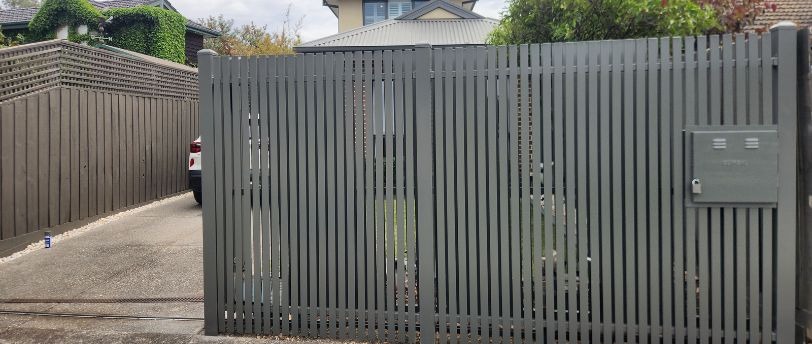
Sliding gates work hard every single day. They open and close dozens of times a week, sit out in all weather, and deal with a lot of mechanical stress over time. Most homeowners do not think about their gate until it stops working. By that point, the repair bill is usually much higher than it needed to be.
Keeping up with sliding gate maintenance is not a big job. It does not take much time either. A few basic checks done every few months can keep your gate running well for many years. This guide covers the main areas to look after, from the track and rollers to the motor and safety sensors. Whether your gate is brand new or has been running for ten years, the same basics apply.
Why Your Gate Needs Regular Attention
A sliding gate has a lot of parts that move every single time it opens or closes. There are rollers, gate wheels, a gear rack, a motor, wiring, and the gate frame itself. Each of these parts wears down slowly over time. That is completely normal. The problem comes when those worn parts are not checked and they start causing damage to nearby parts.
Regular automatic gate maintenance catches small problems before they turn into big ones. A roller sitting slightly off track today can damage the gear rack within a few months. Debris sitting in the track puts extra load on the motor every single time the gate moves. Electric gate maintenance is really just about keeping everything clean, lubricated, and correctly aligned. That alone handles most of the common issues people run into.
Cleaning the Gate Track and Gate Surface
The gate track runs along the ground, which means it picks up everything. Leaves, dirt, gravel, bark, and other debris end up sitting in it. That buildup causes friction when the gate moves. It also holds moisture against the metal, which speeds up rust and corrosion over time.
Cleaning the track is one of the easiest sliding gate maintenance tasks you can do. A stiff brush or a blast from a garden hose clears most buildup in a few minutes. Work from one end of the track to the other and check that water can drain away freely. Pooling water is a common cause of rust, especially through winter. Give the gate surface a hose down every couple of months too. Salt, grime, and bird droppings slowly eat into the finish and can cause rust spots if left too long.
Lubricating All the Moving Parts
Lubrication is one of the most important steps in electric gate maintenance. Without it, metal parts grind against each other and wear out much faster than they should. It is also the step that gets skipped most often.
Here is what needs lubricating and what product to use:
Gate wheels and rollers: Use a light oil-based lubricant. Apply a small amount and wipe off any excess
Gear rack: Apply lubricant evenly along the full length of the rack
Guide rollers: A quick spray every few months keeps them moving freely
Motor drive pinion: Check your motor manual. Some motors need a small amount of grease here
Hinges and pivot points: Any spot where metal meets metal needs attention during each service
Avoid WD-40 for this job. It feels slippery at first but dries out fast and attracts dust. A proper oil-based lubricant or silicone spray lasts much longer and does a better job on gate components.
What to Look for During a Visual Inspection
A visual inspection takes around ten minutes. Do it on a clear day so you can see everything properly. You are looking for anything that seems worn, bent, cracked, or out of place.
Work through each part of the gate system in order:
Gate frame and panels: Look for dents, bends, or cracks. Vehicles and delivery trucks can catch a gate without anyone mentioning it
Gate wheels: Check they are sitting flat in the track. Worn or cracked wheels need replacing
Gear rack: Look for missing teeth or sections that have shifted out of alignment
Guide rollers: Both top and bottom rollers should spin freely with no wobble or grinding
Gate track: Look for bent or raised sections. Even a small deformation can cause the gate to catch or drag
Motor bolts and fixings: Give them a firm check by hand. Vibration from daily use loosens bolts gradually
Wiring and cable connections: Look for visible fraying or corrosion at terminals. Do not touch exposed wiring
Safety sensors and photo eyes:Check they are clean, undamaged, and sitting in proper alignment
Most automatic gate problems that seem to come out of nowhere actually built up slowly over many months. Catching them early during a routine check saves a lot of trouble later.
Looking After Your Gate Motor
The gate motor is the heart of your sliding gate and the most expensive part to replace. To keep it running well, keep the area around the base clear of leaves, dirt, and weeds. This debris holds moisture that can cause the metal to rust. It also invites ants and other insects to nest inside the housing, where they can chew through sensitive wires. Spraying an insect barrier around the motor base is a simple way to prevent these pests from getting inside.
Every six months, turn off the power and take off the motor cover for a quick inspection. Look for any signs of water, rust, or bugs that might have moved in. Most motors are sealed, so you do not need to touch the wires or the circuit board. If you see any damage or corrosion during your check, it is best to stop and call a professional technician. Catching these problems early can save you from a much larger repair bill later.
Checking the Safety Features on Your Gate
Safety features stop the gate from closing on a person, a car, or a pet. If they stop working, the gate becomes a real hazard. These need to be tested regularly, not just assumed to be fine.
Here is what to check and how to test it:
Photo eye sensors: Stand in the gate's path while it is closing. The gate should stop and reverse. If it does not, the sensors need cleaning or realignment
Auto-reverse and obstacle detection: Most gate motors have built-in torque sensing that reverses the gate when it meets resistance. Test this by gently holding the gate while it closes
Warning lights and buzzers: Check that all warning signals are working if your system has them
Remote controls and keypads: Test every access device. Replace remote batteries before they go completely flat
Backup battery: If your [gate automation system]() has a battery backup, cut the mains power briefly to test it. The gate should still open and close. Replace the battery every two to three years
When to Call a Professional
While basic upkeep is DIY-friendly, certain tasks require a qualified technician. Anything involving internal electrics, such as rewiring, control board faults, or limit switch adjustments, should be left to the experts. If your gate is grinding, stopping mid-travel, or displaying error codes, a professional can diagnose the issue without risking further damage.
Even if your gate seems to be running well, consider these scenarios for professional intervention:
Routine Servicing: Book a professional check every 1–2 years to catch subtle wear.
Emergency Impacts: If the gate has experienced a power surge, flood, or vehicle collision, have it inspected before further use.
Major Repairs: Large-scale hardware replacements or full system overhauls are best handled by experienced installers.
Running a compromised system puts unnecessary stress on expensive components. Getting an expert involved early is the best way to protect your investment.
A Quick Maintenance Checklist to Keep Handy
Nobody wants their gate to fail on a busy morning. Keeping on top of the basics means that day probably never comes.
Here is a simple list to come back to:
Clear debris from the track every one to three months
Lubricate all moving parts every three to six months
Do a full visual inspection every six months
Test all safety features at least once a year
Check the motor housing and backup battery annually
Call a professional for any electrical faults or strange gate behaviour
If you are not sure what lubricant to use or what parts your gate model has, check the manual that came with your system. Most manufacturers have manuals available on their website if the original has been lost. A quick call to your installer can also point you in the right direction.
Protect Your Investment with Regular Care
A sliding gate that gets regular attention is a gate that stays reliable. Most big breakages do not happen by accident. They are usually the result of tiny bits of wear and tear that built up over several years. When these small issues are ignored, the gate eventually hits a breaking point and stops working entirely.
The good news is that you do not need to be a professional to look after your gate. Simple tasks like cleaning the track and oiling the moving parts take very little time. A high-quality gate system is a valuable part of your home, and basic care is the best way to keep it running. If you stay consistent with these simple checks, your gate can easily last for ten to fifteen years.
Need Help With Your Gate?
If your gate is making strange noises or you want a professional to take a look, we are here to help. Our team can handle everything from routine services to complex repairs.
Contact iGate Automation Today to keep your gate running like new.
Frequently Asked Questions
How often should I clean my sliding gate track?
Clean your track every one to three months. You may need to do it more often if your yard has lots of trees or gravel. A clean track stops the motor from working too hard and protects the wheels.
What is the best lubricant for gate parts?
Use a silicone spray or a light oil. Do not use WD-40 because it dries out and attracts dirt. Good lubrication keeps the gate quiet and prevents metal parts from wearing down.
Why is my sliding gate moving slowly?
This is usually caused by dirt in the track or rusty wheels. If cleaning and oiling do not help, your battery or motor might be weak. A technician can check if the system needs a repair.
Can I use my gate if the power goes out?
Yes. You can use a manual release key to move the gate by hand. Most systems also have a backup battery that allows the gate to open and close a few times without main power.
How long does a sliding gate motor last?
A good motor should last ten to fifteen years with regular care. Keeping the area clean, stopping pests, and fixing small problems early will help your motor last as long as possible.
Address : 22 Barkly St, Brunswick East VIC 3057, Australia
Connect With Us On Social Media
I Gate Automation
ABN 25 634 531 231
Our Privacy Policy
Our Terms & Conditions
Contacts
1300 251 900
info@igateautomation.com.au