Melbourne’s Trusted Experts in Automated Gates & Fencing – Residential, Commercial & Industrial Solutions.

Why Aluminium Gates Outlast Traditional Ones
Learn why aluminium gates are the superior choice for Australian homes due to low maintenance, weather resistance, and automation compatibility.
3/27/20267 min read
If you've ever had to deal with a gate that won't close properly, or one that looks a bit rough after just a couple of wet seasons, you'll know how frustrating it is. Traditional gates made from wood or older-style steel have been around for a long time. And while they do the job in the short term, they tend to create more problems than people expect.
This post goes through some of the most common issues that come with traditional gates and looks at how aluminium gate designs actually fix those problems in a pretty practical way.
Wood Gates and the Warping Problem
Wood absorbs moisture. When it gets wet, it swells. When the sun dries it out, it shrinks back. Over time, all that expanding and contracting causes the wood to twist or warp. In Melbourne, where we get a mix of dry summers and wet winters, timber gates really do take a beating. Even treated timber isn't completely immune to it. Once warping sets in, the gate doesn't sit right anymore. It might drag along the ground or refuse to latch properly.
Aluminium doesn't do any of that. It doesn't absorb water, so it keeps its shape season after season. Whether it's been raining for a week or baking in summer heat, the gate still opens and closes the same way it did the day it was installed. If you're looking at gate designs that will hold their shape over time, aluminium is worth a serious look.
Rust on Steel Gates
Older steel gates rust. That's just the reality of it. Unpainted or poorly coated steel exposed to rain and humidity starts showing orange streaks fairly quickly. In coastal suburbs around Melbourne, salt in the air makes it even worse. Rust doesn't just look bad either. It actually weakens the metal over time. Hinges start to seize, the frame loses strength, and eventually the whole gate needs replacing.
Aluminium is a completely different story. It naturally forms a thin protective layer on its surface that stops corrosion from setting in. Most aluminium gates also come with a powder-coated finish that locks in colour and keeps moisture away from the metal underneath. That's one of the reasons why aluminium and steel fencing comparisons almost always come back to aluminium when longevity matters.
Heavy Gates Are a Pain to Use
A solid steel gate, especially a big double swing gate, can weigh a lot. That weight puts real stress on the posts and hinges. Over time, they start to sag. The gate drops and starts grinding on the ground. Heavy gates also make automation trickier. Larger motors are needed to handle the load, and those motors wear out faster when they're working against extra weight day after day.
Aluminium is genuinely light for its size. A well-built aluminium gate gives you the same strength and security as heavier options but without all that dead weight. Sliding gates made from aluminium, for example, run far more smoothly on their tracks and put less strain on the motor system over the long term.
Ongoing Maintenance Costs Add Up
With wooden gates, maintenance is basically never-ending. It becomes a yearly job, and if you skip a season or two, the deterioration speeds up fast. Common tasks include:
Sanding and repainting to stop the surface from peeling
Resealing to keep moisture out
Treating for rot, especially at the base where the timber sits close to the ground
Steel gates aren't much better. You're looking at anti-rust treatments, repainting, and regular checks for surface damage. All of that takes time and costs money. Aluminium gates are genuinely low maintenance. A rinse down with the hose and a wipe over is usually enough to keep them looking clean. There's no paint peeling, no rust to treat, no timber rot to worry about. For people who want something that just works without constant attention, that's a real difference.
Limited Design Options with Traditional Materials
Older gate materials don't always give you a lot of flexibility. Wood can only be shaped in so many ways before the structure starts getting weak. Steel fabrication for decorative gates tends to be expensive and heavy.
Aluminium is actually quite versatile. It can be cut, welded, and formed into a wide range of shapes and profiles. Some of the more common design directions people go with include:
Modern flat-panel styles that suit contemporary homes
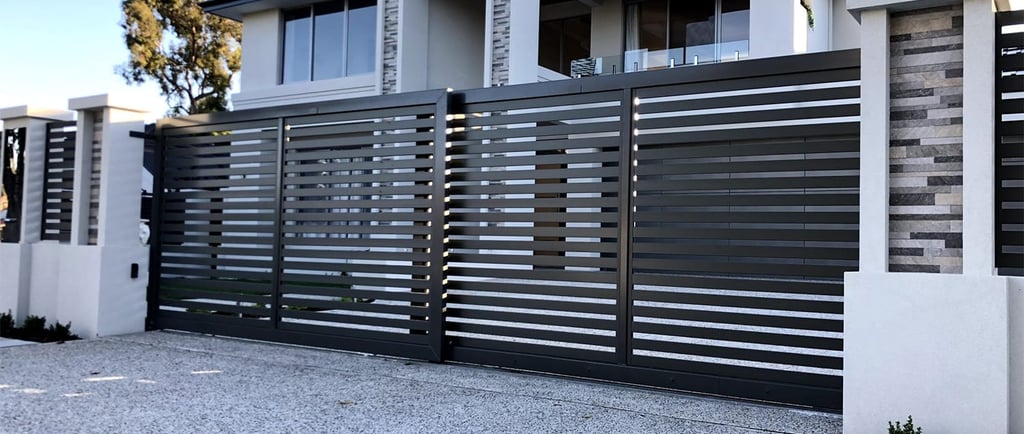
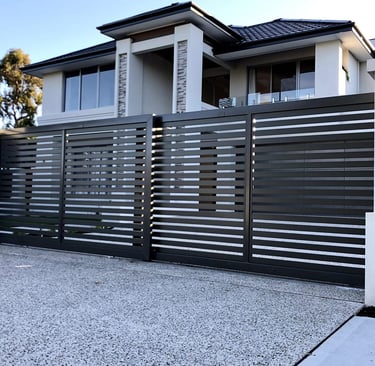
Vertical or horizontal slat layouts for a clean, open look
Traditional picket profiles for older style or heritage properties
Custom colour finishes through powder-coating to match the existing exterior
Swing gates in single and double configurations made from aluminium can be designed to suit heritage-style homes just as easily as new builds. That kind of flexibility just isn't there with a lot of older gate materials.
Security That Holds Up Over Time
A gate that has been weakened by rot or rust doesn't offer great security anymore. Even if it looks intact, the structural integrity isn't what it was. Wooden panels can be pushed or kicked through. A heavily corroded steel frame can fail unexpectedly.
Aluminium gates hold their strength consistently. They can be designed with security features built right into the structure, including:
Close-spaced slats or infill panels that are hard to climb or get through
Reinforced lock points integrated into the frame
Solid vertical profiles that don't weaken over time
For people thinking about pedestrian and side gates as well as main driveway gates, this matters. A side gate that's just as strong as the main entry closes off a common weak point in a property's perimeter.
Working Well with Automation Systems
Traditional heavy gates and automation don't always mix well. Some older wooden or steel gates weren't built with automation in mind at all, and retrofitting them is a headache. A few common issues include:
Motors working harder than they should because of the extra weight
Tracks and hinges wearing out faster under the load
Sensors struggling to calibrate correctly due to inconsistent gate dimensions
Aluminium gates are designed to work with modern automation systems from the start. The lighter weight means motors run more efficiently. The consistent dimensions mean sensors and safety systems can be calibrated accurately. Gate automation using aluminium gates generally results in fewer call-outs for faults and a longer lifespan for the motor and hardware.
Fading and UV Damage
In Australia, UV exposure is serious. Traditional timber gates fade, dry out, and crack under the sun. Even painted steel can bubble and peel when UV breaks down the topcoat. It's a problem that sneaks up on you. The gate looks fine one season and then suddenly the surface is flaking and the colour has faded to something unrecognisable.
Aluminium with a quality powder-coat finish holds up much better under UV. The colour stays consistent for years, there's no cracking or bubbling, and the surface doesn't absorb heat the same way darker metals do. That can actually extend the life of any rubber seals or weather strips attached to the gate too.
What It Costs in the Long Run
Upfront, aluminium gates might seem similar in price to other options. But the total picture looks different when you factor in what happens over the next ten to fifteen years. With traditional gates, the ongoing costs tend to stack up:
Repainting or resealing every year or two
Rust treatments and hardware replacements on steel gates
Full gate replacement after warping or rot sets in, often within five to eight years
With aluminium, most of those costs simply don't apply. The gate keeps doing its job without much input from you. Replacing a timber gate after five or six years because of warping and rot is not cheaper than buying aluminium the first time. That's a simple reality a lot of people learn the hard way.
What This All Comes Down to for Australian Homes
Traditional gates served a purpose for a long time. But the problems that come with wood and older-style steel, including warping, rust, heavy weight, constant maintenance, and limited design options, are real. They affect how the gate looks, how it works, and how long it lasts. Most people don't realise how much time and money goes into keeping a timber or steel gate functional until they're already knee-deep in repairs.
Aluminium gate designs address each of those issues in a practical way. Not because aluminium is a perfect material, but because it's well suited to the demands of Australian weather, Australian suburban life, and the way modern properties are designed and used. If you're weighing up what material makes sense for a new gate, understanding these differences before you decide can save you a fair bit of hassle down the track. If you'd like to talk through your options, the team at I Gate Automation is happy to help.
Frequently Asked Questions
1. How long does an aluminium gate typically last?
With basic care, a powder-coated aluminium gate can last 20 to 30 years or more. The material doesn't rust or rot, which removes two of the most common causes of gate failure.
2. Can aluminium gates be painted if I want to change the colour later?
Aluminium can be repainted, but it's worth knowing that powder-coating is more durable than standard paint. If you do want a colour change, it usually involves sandblasting the existing finish first and then recoating professionally.
3. Are aluminium gates strong enough for a security gate?
Yes. Aluminium is a strong, rigid material when properly designed and fabricated. Gates can be built with reinforced frames, close infill profiles, and solid lock-points that provide good resistance to forced entry.
4. Do aluminium gates work in coastal suburbs near saltwater?
Aluminium actually performs well in coastal environments. It doesn't rust the way steel does, and a quality powder-coat adds extra protection against salt air. It's one of the more recommended materials for properties close to the water.
5. Can an existing heavy steel or wooden gate be replaced with an aluminium one without changing the whole post setup?
Sometimes yes, but it depends on the condition of the existing posts and whether they're set at the right spacing. In many cases the posts can be reused. A gate installer can assess this during a site visit before any work begins.
Address : 22 Barkly St, Brunswick East VIC 3057, Australia
Connect With Us On Social Media
I Gate Automation
ABN 25 634 531 231
Our Privacy Policy
Our Terms & Conditions
Contacts
1300 251 900
info@igateautomation.com.au