Melbourne’s Trusted Experts in Automated Gates & Fencing – Residential, Commercial & Industrial Solutions.

Why Is My Electric Gate Beeping and Not Opening?
Is your electric gate beeping but not opening? Learn the common causes, simple fixes, and when to call a gate repair expert to get it working again.
7/16/20268 min read
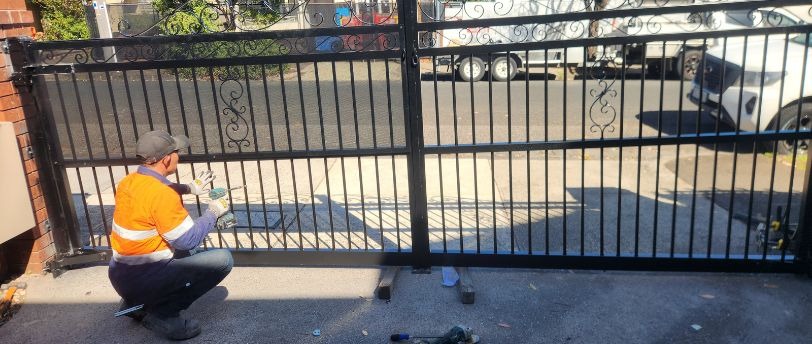
You press the remote. Nothing happens. Instead, your gate just sits there and beeps at you. It is annoying, especially when you are running late or trying to get the car out of the driveway. Most electric gates have a small control box tucked inside the motor, and that box uses beeps to flag a problem, a bit like a smoke alarm chirping when the battery is flat. So the noise itself is not the fault, it is just the gate's way of pointing you toward it.
This guide walks through the most common reasons an electric gate beeps and will not open, how to check each one yourself, and when it is time to call in a professional. It is written for Melbourne homeowners and business owners with a sliding or swing gate, but most of it will apply no matter where you live or what brand of motor you have.
Why Do Electric Gates Beep in the First Place?
Beeping is a safety feature, not a fault by itself. Gate motors have sensors and a small computer board that keep checking things like the battery, the motor, and whether the two sensors can still see each other. When something is not right, the board beeps instead of just quietly giving up.
Some brands beep once every few seconds to say "something is wrong here." Others use a beep count, so one beep might mean a low battery and three beeps might mean something is blocking the gate. The pattern depends on your motor brand, so it helps to check your gate manual if you still have it. If you cannot find the manual, most brands list this information on their website under the model number printed on the motor case.
The Most Common Reasons a Gate Beeps
Here are the reasons we see most often when a gate beeps and refuses to open.
A weak backup battery: Most gate motors run on mains power but keep a backup battery in case of a blackout. When that battery gets weak, the board beeps to warn you before it dies for good. You might also notice the gate moving slower than normal or stopping halfway, since a tired battery cannot always give the motor enough power to finish the job.
Dirty or blocked sensors: The small sensor eyes near the base of the gate need a clear, straight line to each other. Dust, spider webs, leaves, or strong sunlight can throw them off. Even a light coating of dust on the lens can be enough to break the beam, and the gate will treat that as an obstruction every single time.
Something in the gate's path: Gravel, leaves, a toy, or a fallen branch sitting in the track can stop the gate and set off an alarm beep. This is more common after windy weather or when the gate has not been used for a few days, since debris has more time to build up unnoticed.
Worn parts inside the motor: Gears and rollers wear down over time, which makes the motor work harder than it should. As the wear gets worse, the motor can draw more current than normal, and the control board picks this up as an overload and beeps to protect itself.
A fault in the control box: Sometimes the electronics inside develop a fault after a power surge, water getting in, or just old age. Once a board starts to fail, the beeping can become random or constant, since the whole warning system relies on that board working properly.
A flat remote or keypad battery: This will not usually make the gate itself beep, but it looks like the same problem, since nothing happens when you press the button. It is worth ruling this out early, since it is the cheapest and quickest fix on this whole list.
Checking the Battery
If your gate has started beeping and moving slower than usual, or has stopped moving altogether, the backup battery is the first thing worth checking. Most home gate systems use a 12 volt battery sitting inside the motor housing.
A healthy battery should sit close to 12 volts when you test it with a meter. If the reading drops well below that, especially while the gate is trying to move, it is probably time for a new one. Batteries in outdoor gate motors usually last around three to five years, a bit less if the motor sits in full sun or gets very cold at night. If you are not comfortable using a meter yourself, this is something a technician can check quickly during a service visit.
Checking The Sensors
The sensor eyes are the small boxes fixed to the gate posts, facing each other across the driveway. They send an invisible beam between them, and if that beam gets broken, the gate assumes something, or someone, is in the way and stops moving.This is one of the most common problems with automatic gates, but it's often the easiest to fix:
Wipe both sensor lenses with a soft, dry cloth. Even a thin layer of dust can throw off the reading.
Check that both sensors still point straight at each other. A knock from a car door or a garden tool can shift them out of line.
Look at the small light on each sensor if it has one. A steady light usually means it is working, while a blinking or dark light can point to a problem.
Check for spider webs in or around the sensor case, especially after a few weeks of warm weather.
Make sure nothing is sitting in the beam permanently, like an overgrown bush or a rubbish bin.
If the sensors are clean and lined up but the gate is still beeping, the wiring running to them might be loose or damaged. That is worth getting checked properly rather than guessing.
Checking for Blockages
Sliding gates in particular pick up debris in the ground track over time. Leaves, small stones, and dirt build up and eventually stop the wheels rolling smoothly. The motor feels the extra resistance, thinks something is blocking the gate, and beeps instead of forcing it through. If you have one of our sliding gates installed, a quick sweep of the track every few weeks will keep this from happening.
Have a look along the whole track and clear out anything you find with a stiff brush. For swing gates, check that the hinges are not rusted or stuck, and that nothing has grown up around the base of the gate, like grass or weeds. If your gate has recently been hit by a car, a trolley, or even strong wind, there could be damage to the frame or track that is not easy to spot just by looking. In that case, it is best to get it checked rather than keep pressing the remote, since forcing a bent gate can put more strain on the motor.
Common Beep Patterns and What They Usually Mean
Beep patterns are not the same across every brand, but here is a general guide based on what most home systems use. It is always worth checking your own manual too, since some brands give different meanings to the same pattern.
Simple Checks Before You Call Someone
Before booking a repair, there are a few basic steps worth trying, since they sort out a good number of cases on their own.
Turn off the power to the gate motor at the switch or breaker, wait about thirty seconds, then turn it back on. This clears a lot of small faults.
Clean the sensor lenses and check they line up, as covered above.
Clear the track or swing path of anything sitting in the way.
Test the backup battery and replace it if it is weak.
Replace the battery in your remote or keypad if you have not done so in a while.
If your gate has an emergency release key, use it to unlock the motor and check the gate slides or swings freely by hand.
If you have tried all of these and the gate is still beeping, the fault is likely inside the motor or the control box, and that is not something worth pulling apart yourself. Forcing a gate open when the motor is straining can damage the gears further and turn a simple fix into a full motor replacement.
When It Is Time to Call a Professional
Some faults need a trained eye. If the beeping keeps going after you have turned the power off and on, if the motor makes grinding or clicking noises, or if the gate moves partway then stops and reverses every single time, these usually point to a fault inside the motor or the wiring. A technician can plug in the right tools, read the exact fault from the board, and find the problem without a lot of guesswork.
This matters even more for commercial gates or larger driveway gates, since they carry more weight and put more strain on the motor. A fault that seems small on a light residential swing gate can be a bigger deal on a heavy sliding gate that opens many times a day. If your gate is beeping and will not open, our team handles electric gate repairs across Melbourne and can usually find the fault on the first visit, whether it is the battery, the sensors, or something deeper in the control box.
Keeping Your Gate From Beeping Again
A bit of regular upkeep goes a long way. Wipe down the sensors every couple of months, especially after windy weather. Sweep the track every few weeks if you have trees nearby. Get the battery tested once a year, and have the whole system looked over by a technician every twelve to eighteen months, much like you would service a car. Gates that get this kind of basic care tend to run quietly for years without any surprise beeping.
If your gate keeps giving you trouble no matter what you try, it might be time to look at your gate automation setup as a whole. Older motors and control boards wear out eventually, and newer systems tend to run quieter and hold up better over time.
Getting Your Gate Back to Working Quietly
A beeping gate is annoying, but it is rarely a mystery once you know what to check. Most of the time it comes down to a tired battery, a dirty sensor, or something small sitting in the track. Go through the checks above and you should be able to find the cause fairly quickly. If it turns out to be something inside the motor or the control box, that is when it makes sense to bring in someone who works on these systems every day.
If you are in Melbourne and your gate is still beeping after trying the basics, get in touch with our team and we will come take a look and sort it out properly.
Frequently Asked Questions
Why does my gate beep but the motor does not move at all?
This usually points to a fault in the control box or a loss of power to the motor. Start by turning the power off at the breaker, waiting thirty seconds, then turning it back on. If the gate still will not move, the wiring or control board likely needs a professional check.
Can I fix a beeping gate myself?
Many causes, like a dirty sensor or a weak battery, are simple enough to check and fix yourself. Anything involving the motor gears or the control box is safer left to a technician, since these parts can be costly to replace if handled the wrong way.
How do I know if it is the battery or the sensors?
A slow, single beep that gets worse over a few days usually points to the battery. Quick, repeated beeps that happen mainly when the gate tries to move usually point to the sensors. Testing the battery with a meter is the fastest way to rule it out.
Is a beeping gate a safety risk?
Generally no, since the beeping means the safety system is doing its job. It stops the gate from closing on a car, a pet, or a person. The real risk is ignoring the beeping and forcing the gate to keep working anyway.
How often should I get my electric gate serviced?
Most manufacturers recommend a service every twelve to eighteen months for home gates, and more often for commercial gates that open and close many times a day. Regular servicing catches small issues, like a weak battery, before they turn into a gate that will not open at all.
Address : 22 Barkly St, Brunswick East VIC 3057, Australia
Connect With Us On Social Media
I Gate Automation
ABN 25 634 531 231
Our Privacy Policy
Our Terms & Conditions
Contacts
1300 251 900
info@igateautomation.com.au