Melbourne’s Trusted Experts in Automated Gates & Fencing – Residential, Commercial & Industrial Solutions.

How Much Does Automatic Gate Installation Cost in Melbourne in 2026?
Learn the average automatic gate installation cost in Melbourne for 2026. Compare gate prices, automation costs, and factors that affect your quote.
7/20/20266 min read
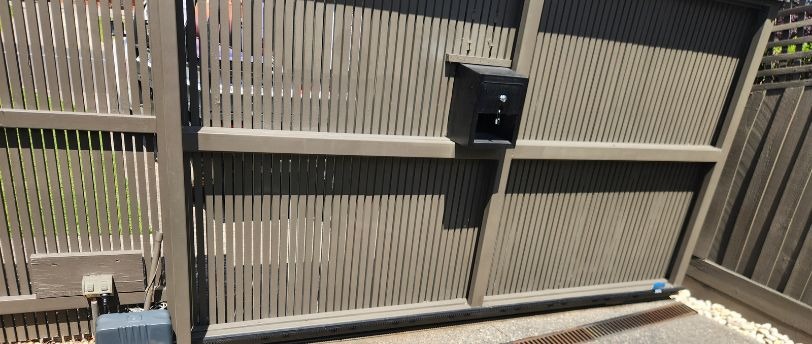
If you have been getting quotes for an automatic gate lately, you have probably noticed the numbers jump around a lot. One company quotes you $3,500. Another quotes $11,000 for what seems like a similar job. It is confusing, and it makes it hard to know if you are being charged fairly.
There is no single price for automatic gate installation, and there should not be. It depends on the gate type, the motor, your driveway, and a few other things most people do not think about until the quote lands in their inbox. Below is a guide to what installers across Melbourne are currently charging in 2026, so you have a benchmark to work from before you start getting your own quotes.
Average Cost of Automatic Gate Installation in Melbourne
In Melbourne, most homeowners pay somewhere between $3,800 and $12,000 for a fully installed automatic gate. That figure covers the gate itself, the motor, safety sensors, and standard installation. Premium setups with custom materials or heavy-duty automation can go well past $15,000, especially for wide driveways or commercial properties.
If you already have a manual gate and just want to add automation, that is a cheaper path. Retrofitting an existing swing or sliding gate with a motor typically costs between $1,500 and $4,000, depending on the gate's weight and the automation brand you choose. This is one of the most common upgrades across Melbourne, because a lot of older homes already have a solid aluminium or steel gate that just needs a motor and sensors added.
Cost by Gate Type
The type of gate you choose has the biggest impact on price. Here is a rough breakdown of what different styles cost once automated in Melbourne.
Sliding gates usually cost a bit more than swing gates because they need a track system, and the installer has to get the levelling exactly right for the gate to run smoothly. If your driveway slopes or the ground is uneven, expect the sliding gate quote to sit at the higher end. Sliding gates tend to suit narrower blocks where a swinging gate would eat into the footpath or garden bed, which is common across a lot of the inner and middle Melbourne suburbs.
Swing gates are usually the more affordable option if you have a flat driveway with room for the gate to open outward or inward. Double swing gates cost roughly 40 to 50 percent more than a single swing because you need two motors instead of one, plus the extra hardware to keep both leaves aligned.
What Actually Drives the Price Up or Down
A lot of people assume the gate panel itself is the biggest cost. In reality, it is usually a combination of smaller factors that add up.
Gate size and weight: A 6 metre gate needs a stronger motor and more structural support than a 3 metre gate, so both the hardware and labour cost more.
Material: Aluminium is lighter and generally cheaper to automate than heavy steel, since the motor does not have to work as hard. Colorbond panel gates sit somewhere in between on weight and cost.
Power source: Mains powered gates need trenching for the electrical cable, which can add $500 to $2,000 depending on the distance from your switchboard. Solar powered systems skip the trenching but the solar kit itself usually costs more upfront.
Site access and ground conditions: Sloped driveways, uneven concrete, or gates a long way from power all add labour time.
Automation brand and motor size: A basic motor kit might cost $600 to $1,200, while a heavy-duty commercial-grade motor can run past $3,500.
Extras: Intercoms, keypads, GSM access (opening the gate through your phone), and video entry systems typically add $500 to $2,500 to the total.
If you are weighing up whether to go with automatic sliding gates or a swing setup, it is worth thinking about how often the gate will be used and whether you need it to handle vehicles and pedestrians separately. Plenty of homeowners end up adding a pedestrian gate alongside the main driveway gate so guests and delivery drivers are not opening the full vehicle gate every time.
Installation Costs and Hidden Extras
Installation labour in Melbourne generally sits between $1,000 and $5,000, depending on how complicated the job is. This covers mounting the gate, wiring the motor, fitting safety sensors, and testing everything to make sure it complies with the Australian safety standard for automated gates, AS 5035.
A few costs that catch people off guard:
Electrical trenching for mains powered gates, usually $500 to $2,000.
Concrete footings or posts if your existing pillars are not strong enough to carry a motor and gate.
Council permits, which some Melbourne councils require if the gate sits near a public footpath or in a heritage zone. Budget a few hundred dollars and a few weeks of waiting time if this applies to you.
Driveway levelling or minor landscaping if the ground needs to be flat for a sliding gate track.
None of these are deal breakers, but it pays to ask about them upfront so your final invoice does not surprise you. A properly itemised quote should separate the gate, the motor, the civil works, and any access control gear so you can see exactly where your money is going.
DIY vs Professional Installation
Some automation kits are sold as DIY friendly, and technically you can install a basic motor on an existing gate yourself. But there is a catch. Any gate that connects to mains power legally needs a licensed electrician, and AS 5035 requires safety sensors and force limiting to stop the gate from crushing anything in its path. A DIY install that skips these steps can fail a compliance check and may even void your home insurance if something goes wrong.
The money you save doing it yourself, usually somewhere between $1,000 and $3,000, often disappears later in repairs or a full redo. Installers get called out fairly often to fix DIY jobs where the motor was undersized for the gate or the sensors were never wired in properly. If you are set on saving money, retrofitting an existing gate with gate automation rather than building a new one from scratch is usually the more sensible way to cut costs without cutting corners on safety.
Residential vs Commercial Automatic Gates
Commercial and industrial gates sit in a different price bracket to a standard home driveway gate, mostly because they need to handle constant use and often heavier loads.
If you are managing a warehouse, factory, or a shared driveway for a block of units, commercial automatic gates and industrial electric gates are built with stronger motors and steel frames that can handle daily wear without breaking down. It costs more upfront, but a light-duty residential motor simply will not hold up under commercial traffic.
How to Get an Accurate Quote
Getting three separate quotes is still the best way to figure out if a price is fair. When comparing quotes, check that each one includes the same things: the gate panel, motor, safety sensors, remotes, and standard installation. A quote that looks cheap on paper sometimes leaves out electrical work or council permits, which then get added on later as extras.
It also helps to have a rough idea of your budget before you start calling around. If you know you want a mid-range sliding gate with basic automation, most Melbourne installers should land somewhere in the $4,000 to $9,000 range for that job. Anything wildly outside that, in either direction, deserves a question or two before you accept it.
Getting the Right Gate for Your Budget
The price of your automatic gate really comes down to what you actually need it to do. A simple swing gate on a flat driveway with a light-duty motor will always be cheaper than a wide sliding gate with a heavy-duty motor and smart access control. Neither option is wrong, it just depends on your property, your budget, and how much convenience you want out of the system.
If you are still working out which type of gate suits your driveway, it is worth looking through a few gate designs before getting quotes, since the style and material you choose will shape the final number more than almost anything else. We are always happy to walk Melbourne homeowners through their options and put together a straight, itemised quote for their specific property. Get in touch with our team for a free quote on your driveway.
Frequently Asked Questions
How much does it cost to automate an existing gate in Melbourne?
Adding a motor and safety sensors to a gate you already have usually costs between $1,500 and $4,000, depending on the gate's weight and the automation brand you pick.
Are sliding gates more expensive than swing gates?
Generally yes. Sliding gates need a track system and precise levelling, which adds to both the material and labour cost compared to a standard swing gate.
Do I need council approval to install an automatic gate in Melbourne?
It depends on your council and where the gate sits. Gates near a public footpath, over 1.5 metres high, or in a heritage overlay zone often need a permit. Check with your local council before installation starts.
Can I install an automatic gate myself to save money?
You can install some parts yourself, but any connection to mains power legally requires a licensed electrician, and the system must meet AS 5035 safety standards. DIY installs that skip this often fail compliance checks.
How long does an automatic gate last once installed?
With proper installation and regular servicing, most automatic gates last 10 to 15 years or more before major components need replacing.
Address : 22 Barkly St, Brunswick East VIC 3057, Australia
Connect With Us On Social Media
I Gate Automation
ABN 25 634 531 231
Our Privacy Policy
Our Terms & Conditions
Contacts
1300 251 900
info@igateautomation.com.au